Why Your Hands Suddenly Feel Awkward on Camera
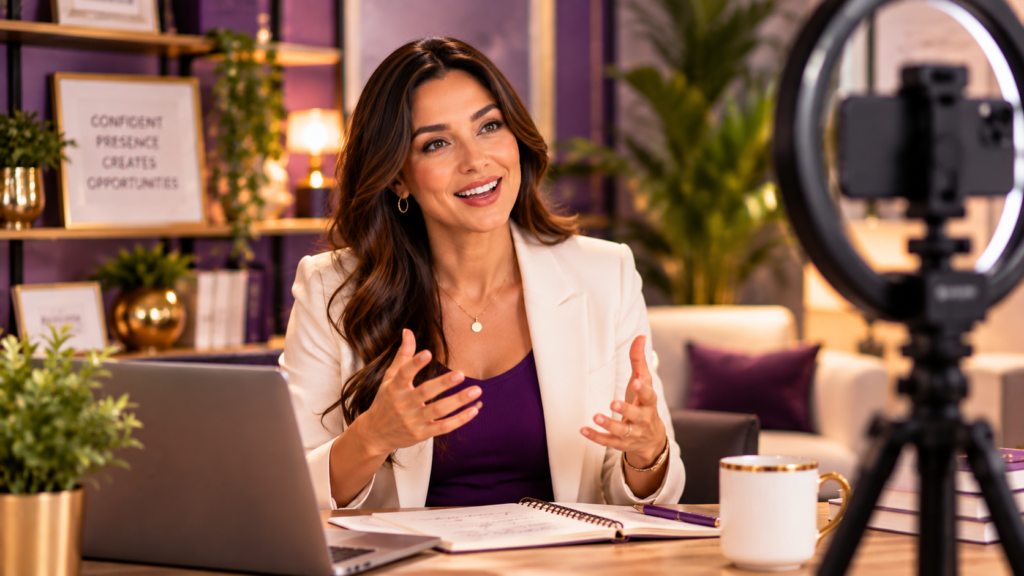
Think about the last time you had a relaxed conversation with a friend or colleague.
Did you plan where to place your hands during that time?
Probably not.
You moved naturally because you were focused on the conversation.
But when a camera is recording, that attention often shifts toward how you look. You start noticing movements you wouldn’t normally think about.
That’s when your gestures can stiffen or become exaggerated.
The solution isn’t to control every movement. It’s to become comfortable enough to stop monitoring yourself.
Where Should You Put Your Hands?
There’s no single correct position. What works depends on whether you’re sitting, standing, or speaking directly to the camera or the people.
If you’re sitting at a desk:
Rest your hands comfortably on the table or loosely together. When you make a point, allow them to move naturally.
If you’re standing:
Keep your arms relaxed at your sides or your hands loosely together near your waist. Avoid forcing them into one position throughout the video.
If you’re recording a close-up video:
Keep gestures within the camera frame when possible. You don’t need large movements to emphasize a point.
The goal is to find a comfortable starting position, not a pose you must maintain.
Let Your Gestures Support Your Message
Natural hand gestures can make your communication more engaging.
For example, you might use your fingers when explaining three steps, open your hands when introducing an idea, or make a small movement to emphasize something important.
But not every sentence needs a gesture.
Sometimes, keeping your hands relaxed allows viewers to focus on what you’re saying.
One mistake people make is assuming that more movement creates more energy.
It doesn’t always.
Too much movement can distract viewers, while trying to remain completely still can make you appear uncomfortable.
Good body language supports your message without competing with it.
This is why authentic expression matters. Your movements should reflect how you naturally communicate, not how you think someone on camera is supposed to behave.
Pay Attention to Tension, Not Perfection
When reviewing a recording, it’s easy to focus on every little movement.
Instead, look for signs of tension.
Are your shoulders raised? Are you gripping your hands tightly? Are you holding your arms in place because you’re afraid to move?
These are more useful things to notice than whether every gesture looks polished.
Before recording, relax your shoulders, take a comfortable breath, and remind yourself who you’re speaking to.
Through Crush It On Cam and as the host of the Mastery Podcast with Dr. Sas, I emphasize authentic expression and confident communication. The goal isn’t to create a different personality for the camera. It’s to help your natural presence come through.
Try This: A Simple 60-Second Exercise
Choose a topic you know well and record yourself explaining it for one minute.
Don’t prepare a script or plan your gestures.
Then watch the recording twice.
First viewing: Listen to your message. Does it sound clear and conversational?
Second viewing: Observe your hands and shoulders. Where do you look relaxed? Where do you appear tense?
Now record again, focusing on explaining your idea to one person rather than performing for an audience.
Compare the two recordings.
You may notice that your gestures become more natural when you stop thinking about them.
Final Thoughts
Your hands aren’t the problem. The pressure to control them often is.
Building on-camera confidence doesn’t mean learning how to perform every movement perfectly.
It means becoming comfortable enough to communicate naturally.
When you focus on connecting with your audience instead of controlling your appearance, your presence becomes more authentic.